
How Does Workers’ Comp Work? – Guide in 2026
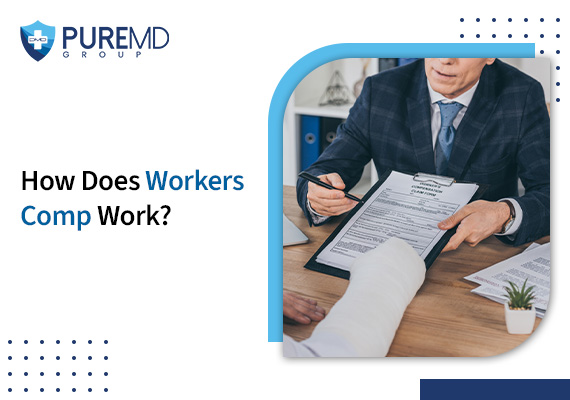
Workplace injuries can happen anywhere, whether in offices, on construction sites, or at a factory, and they happen far more often than many expect. In 2023, U.S. private‑industry employers reported 2.6 million nonfatal injuries and illnesses. Workplace injuries don’t just disrupt one person’s day; they impact everyone involved. For employees, there’s the worry of medical bills, time away from work, and uncertainty about what comes next. For employers, there’s the responsibility of supporting the injured worker while keeping operations running smoothly. This is exactly where workers’ compensation steps in, acting as a built-in protection system for both sides. This blog will walk you through how workers’ compensation works, what it covers, and what you should expect if someone gets hurt on the job. Purpose and Basics of Workers’ Compensation Workers’ compensation creates a clear and fair system for handling workplace injuries and illnesses. Instead of leaving employees to deal with complicated legal claims or general insurance, workers’ comp provides a reliable process for filing workers’ comp claims, getting medical care, and receiving partial wage replacement. At the same time, it helps employers manage injuries in a clear, organized way and reduces the risk of disputes or lawsuits. The system works on a no-fault basis, which means the focus is on the injury and its connection to work, not on proving that the employer was at fault. Benefits cover medical care, rehabilitation, and lost wages, helping employees recover without delays. Employers also follow standard procedures for reporting and managing claims, which makes the process more predictable and efficient. Understanding these basics helps both employees and employers handle workplace injuries with confidence. Eligibility and Types of Injuries Covered Workers’ compensation generally applies to employees who are injured or become ill as a result of their job. This includes full-time, part-time, temporary, and seasonal workers, though coverage can vary by state and employer. Independent contractors typically fall outside the system unless specifically included under state laws or company policies. Employers are required to carry insurance to cover eligible employees, and failing to do so can lead to legal consequences. The types of injuries and illnesses covered are those that occur on the job or result directly from work activities. This can include physical injuries like broken bones, sprains, burns, or cuts, as well as illnesses caused by workplace exposure, repetitive stress, or hazardous conditions. Even injuries that develop over time, such as hearing loss or repetitive strain injuries, can qualify if they are linked to the job. In some cases, especially with disputed or delayed claims, worker’s compensation collection services can help ensure that eligible employees receive the benefits they are entitled to, providing an added layer of support for both workers and employers. Overview of the Workers’ Comp Claim Process The claim process is structured to move from injury reporting to receiving benefits. It is designed to provide timely medical care while determining wage replacement and other support. Reporting a Workplace Injury Employees should report any injury or illness as soon as possible. Prompt reporting protects the employee’s right to benefits and avoids delays in claim processing. Reports are often submitted in writing to the employer, stating when, where, and how the injury occurred. Filing a Workers’ Comp Claim After reporting, the employee completes a claim form. Employers submit this to their insurance carrier. Documentation like medical records, witness statements, or accident reports may be required. Each state sets deadlines for filing; missing them can result in denied benefits. Undergoing Medical Evaluation Medical treatment is provided by authorized healthcare providers. Sometimes insurers request an independent medical examination (IME) to verify the injury and determine the appropriate care. Employees should attend all appointments and follow prescribed treatments to support their claim. Claim Review and Decision Process The insurer reviews medical records, accident reports, and other documentation to decide if the claim is valid. Typical review periods vary by state but generally take a few weeks. Factors like timing of reporting, clarity of medical evidence, and the work-relatedness of the injury influence the outcome. Receiving Workers’ Comp Benefits Once approved, benefits begin. Employees may receive medical treatment coverage, partial wage replacement, and sometimes vocational rehabilitation. Payments continue until the employee recovers or reaches a permanent disability rating. Workers’ comp ensures that injured workers are not left without support while they recover. Types of Workers’ Comp Benefits Workers’ compensation provides several types of benefits to help employees recover and manage the impact of a workplace injury or illness. These benefits cover medical care, lost wages, support for returning to work, and, in some cases, financial assistance for families. 1. Medical Treatment Benefits The first type of benefit focuses on medical care. Workers’ comp covers necessary treatment related to the injury, including hospital visits, surgeries, prescription medications, therapy, and rehabilitation. Typically, care must be provided by approved healthcare providers to ensure it is both effective and properly managed. This ensures employees get the care they need while keeping costs controlled. 2. Wage Replacement Benefits In addition to medical care, workers who cannot perform their regular duties may receive wage replacement. This can include Temporary Total Disability (TTD), Temporary Partial Disability (TPD), Permanent Partial Disability (PPD), or Permanent Total Disability (PTD). Wage replacement usually covers a percentage of lost income and is calculated based on state-specific rules. This support helps employees focus on recovery without worrying about immediate financial strain. 3. Vocational Rehabilitation Benefits Sometimes, injuries prevent employees from returning to their previous role. In these cases, vocational rehabilitation benefits can provide retraining programs or light-duty work. The goal is to help workers regain skills, adapt to new job requirements, and safely re-enter the workforce. Vocational support bridges the gap between recovery and returning to meaningful employment. 4. Death and Survivor Benefits If a workplace accident results in death, workers’ comp ensures financial support for the employee’s dependents. Benefits may include ongoing payments, funeral and burial assistance, and survivor compensation determined by state guidelines. These benefits are intended to provide security and help families cope with the loss of a loved
What is Medical Coding For Clinics and How it Impacts RCM?

Medical coding is one of the most essential behind-the-scenes functions in the healthcare revenue cycle. It converts patient information, such as diagnoses, symptoms, procedures, lab results, prescribed treatments, and medical services, into standardized alphanumeric codes used by insurance companies, government programs, and practices to process claims. The medical codes ensure every healthcare service is accurately documented, billed, and reimbursed. Without coding, healthcare providers would struggle with claim denials, delayed payments, inaccurate reporting, and compliance issues. This post explains what clinical coding is, why the process matters, how it works step by step, the coding systems used across the healthcare industry, and why trained medical coders play a critical role in accurate reimbursement and smooth practice operations. Why Medical Coding Accuracy Matters For Claim Approvals? Healthcare coding is far more than a simple administrative task. It serves as the universal language that connects healthcare providers, insurance companies, and regulatory bodies. When patient encounters are properly coded, it ensures that clinical documentation is converted into standardized data that accurately represents what occurred during the visit. Accurate clinical coding helps prevent revenue leakage, improve claim approval rates, and support clinical decision-making. Coding also ensures compliance with federal regulations such as HIPAA and CMS guidelines, protects practices from audits, and supports accurate reporting. Every diagnosis and procedure must be coded correctly to justify the medical necessity of services, verify proper documentation, and secure accurate reimbursement for providers. What Medical Coders role in reducing denials? Medical coders play a vital role in the healthcare revenue cycle. They interpret complex medical documentation, assign appropriate codes, and ensure that claims accurately reflect the services provided. Coders must understand anatomy, physiology, pharmacology, clinical workflows, and payer rules. They work closely with physicians, billers, and compliance teams to maintain accurate documentation and address coding queries. Certified coders (such as CPC, CCS, or CCA holders) have specialized training that ensures accuracy, compliance, and expertise across various specialties. Whether working in hospitals, outpatient clinics, physician offices, or specialized centers, medical coders are essential for ensuring accurate reimbursement and maintaining the integrity of healthcare data. How the Healthcare Coding Process Works Coding of medical data involves multiple steps that begin the moment a patient interacts with a healthcare provider. While coders do not diagnose or treat patients, their work depends on understanding complex clinical documentation. The following is a detailed breakdown of how the process works from start to finish. 1. Reviewing the Patient’s Medical Record The first step in coding is examining the patient’s chart, which includes physician notes, lab results, imaging reports, operative summaries, prescriptions, discharge summaries, and any other relevant documentation. Coders must analyze the entire record to identify diagnoses, symptoms, procedures performed, medications administered, and any comorbidities. This review requires both clinical knowledge and deep familiarity with coding rules, ensuring all details are captured accurately. Missing or unclear documentation may require coders to query providers for clarification to prevent incorrect or incomplete codes. 2. Converting Documentation Into Standardized Codes Once the coder has a complete understanding of the patient encounter, they assign the correct codes from standardized coding systems such as ICD-10-CM, CPT, and HCPCS. Each system serves a unique purpose in describing diagnoses, services, and supplies. Coders must follow the official guidelines set by CMS, AMA, and WHO to ensure codes accurately reflect what occurred. These rules are updated regularly, so coders must stay informed to avoid penalties, rejections, or compliance violations. Incorrect code selection can lead to underpayments, overpayments, or audit risks. 3. Entering Codes Into the Billing System The final medical coding step is entering the codes into the practice’s billing software or electronic health record (EHR). This data is then used to generate insurance claims, calculate charges, and create reports. Accurate data entry is essential because insurers rely on these codes to determine coverage, reimbursement amounts, and claim approval. If a code is incorrect or incomplete, the claim may be denied, leading to delays, rework, or lost revenue. Effective coding ensures clean claims, fewer denials, and faster payment cycles. Types of Clinical Coding Systems Coding of medical data relies on several universal coding systems that standardize medical information across different healthcare settings. Each system serves a specific purpose and is maintained by different governing bodies. ICD-11-CM (International Classification of Diseases – Clinical Modification) ICD-11-CM codes record diagnoses, symptoms, and clinical conditions using the updated ICD-11 architecture adapted for clinical use. Built on the WHO’s ICD-11 framework, the clinical modification provides greater clinical detail, improved code logic, and better support for electronic workflows. Compared with prior versions, ICD-11-CM enables more precise descriptions through clusterable codes and extension elements. For example, instead of a generic “fracture,” ICD-11-CM allows coding that captures the specific bone, side, chapterable complication, and episode of care, supporting clear medical necessity and accurate billing. CPT (Current Procedural Terminology) Developed by the American Medical Association, CPT codes describe medical procedures and services provided by healthcare professionals. These include surgeries, exams, tests, imaging, and therapeutic interventions. Every physician service billed to commercial or government payers requires a CPT code. CPT codes also determine reimbursement rates and are used extensively in outpatient and physician office settings. Keeping CPT codes up to date ensures compliance with payer policies and reduces the risk of claim denials. HCPCS (Healthcare Common Procedure Coding System) HCPCS codes cover items, supplies, equipment, and additional services not found in CPT, such as durable medical equipment (DME), ambulance services, prosthetics, and certain drugs. CMS maintains HCPCS codes, which are essential for Medicare and Medicaid claims. Understanding when to apply HCPCS rather than CPT is crucial for proper reimbursement, particularly in specialties such as orthopedics, physical therapy, and home healthcare. The Importance of Accurate Healthcare Coding High-quality, accurate coding offers multiple benefits that extend beyond billing and reimbursement. It improves financial performance, supports compliance, enhances patient care, and provides meaningful data for healthcare analytics. The following are the key reasons accurate coding is essential: Improves Revenue Integrity Accurate coding ensures that healthcare providers receive correct reimbursement for the services they deliver. When coding is incomplete or incorrect,
What Is a Personal Injury Claim? – Guide

Every year, more than 140,000 Americans lose their lives to injuries, and millions more experience nonfatal harm. Accidents often bring unexpected medical bills, lost income, and long recovery periods. If you are injured due to someone else’s negligence, you may be eligible to file a personal injury claim. These claims let victims recover compensation for medical expenses, lost wages, and other damages, helping them regain financial stability during recovery. Many people, however, don’t pursue the compensation they deserve because they don’t fully understand the process. Knowing your rights is essential to ensure you receive the support and reimbursement you are entitled to. Understanding Personal Injury Claims A personal injury claim is a civil legal action seeking compensation for harm caused by another party’s negligence or intentional act. Unlike criminal cases, which focus on punishment, these claims are designed to restore the victim financially. Personal injury claims can arise from many situations, including car accidents, medical errors, workplace incidents, defective products, slips and falls, and assaults. The term personal injury claim is sometimes used to describe cases involving injuries caused by someone else. Understanding these basics helps you determine whether your situation may qualify for compensation. Types of Personal Injury Cases Personal injury claims can arise from a wide variety of situations. Each type has its own legal rules and evidence requirements, so understanding them is important for anyone considering a claim. Auto Accidents Each year, about 1.19 million people die in road traffic accidents, and millions more are injured. Because these incidents happen so frequently, many victims may be eligible to file personal injury claims. Auto accidents can involve cars, motorcycles, bicycles, or pedestrians, and the injuries can range from minor cuts to life-changing trauma. Evidence such as accident reports, witness statements, and medical records plays a critical role in supporting these claims. Premises Liability Premises liability claims occur when someone is injured due to unsafe conditions on another person’s property. This can include wet floors, broken stairs, poor lighting, or unsecured objects. To pursue a claim successfully, it must be shown that the property owner knew or should have known about the hazard and failed to take action to prevent injury. Workplace Accidents Many workplace injuries are covered by workers’ compensation, but some situations may allow for personal injury claims. This usually happens when a third party, such as a contractor, is responsible for unsafe conditions rather than the employer. In these cases, victims can seek compensation for injuries caused by someone else’s negligence. Product Liability Product liability claims involve injuries caused by defective or unsafe products. Examples include faulty car parts, defective appliances, or contaminated food. To succeed, claimants need to prove that the product was defective and directly caused the injury. These cases ensure that manufacturers and sellers are held accountable for harmful products. Medical Malpractice Mistakes made by doctors, nurses, or other healthcare providers can lead to serious injury or death. Studies show that around 1 in 10 patients experiences harm during medical care, and more than three million deaths occur annually due to unsafe practices. Claims often involve misdiagnosis, surgical errors, incorrect prescriptions, or birth injuries. Healthcare providers typically rely on personal injury billing services to manage the financial side of these claims efficiently. Intentional Injuries Intentional injury claims involve deliberate acts that cause harm, such as assault or battery. Unlike most personal injury claims, these cases focus on the wrongful act itself rather than negligence. Victims pursue compensation for physical, emotional, or financial damages caused by the deliberate actions of another person. Other Emerging Cases Newer personal injury claims include dog bites, toxic exposures, accidents on public transportation, and cyber-related injuries such as identity theft. In these cases, healthcare providers may need specialized personal injury billing and collections services to track treatment, manage documentation, and recover payments efficiently. Key Legal Elements of a Personal Injury Claim For a personal injury claim to succeed, there are four essential legal elements that must be proven. Each element plays a critical role in building a valid case. Duty of Care The law requires the defendant to act reasonably and avoid causing harm. Drivers must follow traffic rules, property owners must maintain safe premises, and medical professionals must deliver care according to accepted standards. Establishing this duty holds the defendant accountable for their actions. Breach of Duty You must show the defendant failed to meet their duty. A driver might run a red light, a store owner may ignore a wet floor, or a doctor could make a preventable mistake. Proving the breach demonstrates that the defendant did not act with the expected care. Causation Causation links the defendant’s actions directly to your injuries. You must show that their breach caused your harm. For instance, if a driver ran a stop sign and hit your car, the accident must have directly caused your injuries. Damages You must show that your injury caused actual losses. Economic damages include medical bills, lost wages, and property damage. Non-economic damages cover pain, emotional distress, and reduced quality of life. Without clear damages, the court cannot award compensation. Step-by-Step Guide to Filing a Personal Injury Claim Filing a personal injury claim can be stressful, but breaking it down into clear steps makes it easier to handle and improves your chances of being compensated. Below is a step-by-step process for handling a personal injury claim from start to finish. Providers treating patients may use personal injury collections systems to ensure timely reimbursement and proper tracking of liens or settlement payments. Calculating Compensation in Personal Injury Claims When you file personal injury claims, the amount of compensation you might receive depends on the type and extent of your losses. Understanding how compensation is calculated helps you set realistic expectations and prepare for negotiations or court proceedings. Economic Damages These are damages that have a clear financial value. They include medical bills, rehabilitation costs, property damage, and lost wages. Economic damages are usually the easiest to calculate and document because there are receipts, invoices, and official records to support your claim. Keeping
Top 10 virtual medical assistants companies in USA 2026
Healthcare has changed fast over the past few years. Doctors and clinics now deal with more paperwork, patient messages, and data entry than ever before. Many providers have realized that hiring virtual medical assistants can make their daily work simpler, faster, and more organized. Healthcare virtual assistants are trained professionals who handle tasks like scheduling, billing, documentation, and patient coordination remotely. They help clinics save time, reduce overhead, and keep operations running smoothly without hiring more in-house staff. In this article, we look at 10 trusted companies in the United States that offer reliable, secure, and professional medical assistant services. Top Virtual Medical Assistants Companies in the USA 2026 These leading healthcare support companies are transforming how clinics operate by combining technology, trained staff, and healthcare insight. Each one helps providers manage patient care, documentation, and billing with greater accuracy and less stress. 1. PureMD Group PureMD Group has more than a decade of experience supporting healthcare providers across the United States with advanced billing and administrative solutions. Over the years, many clinics have chosen PureMD Group for its consistency, attention to detail, and dependable 24-hour support system that keeps operations running without interruption. The company focuses on helping providers manage billing and documentation for complex cases such as workers’ compensation and personal injury. Their virtual assistants are trained to prepare detailed reports, follow up with payers, and coordinate with attorneys or adjusters when required. This experience with high-complexity claims gives PureMD Group a clear edge in managing time-sensitive work efficiently. Beyond specialized billing, their assistants also handle day-to-day administrative tasks, including patient communication, appointment scheduling, and insurance updates. Each task moves through a structured, data-driven workflow that minimizes errors and shortens turnaround times. For clinics seeking steady support and reliability, PureMD Group’s virtual medical assistant services bring both expertise and availability. 2. RCM Matter RCM Matter is known for its strong background in revenue cycle management and healthcare automation. The company integrates Smart Healthcare Assistants into its billing and administrative systems to help providers work more efficiently. Their assistants handle claim follow-ups, patient scheduling, insurance verification, and data entry directly within EHR platforms. By combining AI tools with trained specialists, RCM Matter reduces administrative delays and improves accuracy across billing and patient support tasks. What sets RCM Matter apart is its balance between technology and human oversight. Each assistant is backed by a billing expert who ensures compliance, data security, and patient confidentiality. This approach helps clinics save time while maintaining trust and precision in their operations. 3. DoctorPapers DoctorPapers, a TechMatter company, offers virtual assistants designed specifically for doctors and multi-specialty groups. Their assistants support front-office and back-office operations, including patient registration, chart updates, and appointment coordination. DoctorPapers uses automation tools that sync with more than 25 EHR systems, allowing assistants to work seamlessly with existing clinic software. They also provide 24-hour support, ensuring that physicians always have someone to manage administrative work, even outside clinic hours. For healthcare providers looking for reliable virtual assistants for physicians, DoctorPapers delivers a complete solution that combines fast response times with secure, HIPAA-compliant systems. 4. MedVA MedVA is a trusted name in virtual healthcare staffing, offering certified medical virtual assistants who manage both clinical and administrative work. Their assistants handle transcription, claims, scheduling, and telehealth coordination with accuracy. Each professional is carefully trained to support physicians and clinics efficiently. Every MedVA assistant operates under U.S.-based supervision, ensuring compliance, clear communication, and secure handling of patient data. Their structured workflow helps reduce errors and improve daily efficiency for healthcare providers. MedVA stands out for its flexible pricing and fast onboarding. Clinics of all sizes rely on their team for consistent, affordable, and high-quality support that boosts productivity and patient satisfaction. 5. My Mountain Mover My Mountain Mover offers Medical Virtual Assistants for Healthcare practices looking to outsource administrative and scribing work.. Their assistants handle EMR documentation, insurance verification, prescription refills, and follow-up scheduling, allowing providers to focus more on patient care. Each assistant is matched carefully to the specific needs of a clinic, ensuring smooth coordination and efficient communication. My Mountain Mover maintains steady workflow management through ongoing training and process monitoring, helping reduce delays and improve consistency. The company is known for building long-term partnerships with healthcare organizations. Their reliable team and structured systems help clinics cut administrative burdens, increase efficiency, and deliver better experiences for both staff and patients. 6. Virtual Nurse Rx Virtual Nurse Rx brings together clinical knowledge and administrative support by hiring licensed nurses as virtual assistants. These professionals are trained to handle clinical documentation, coordinate care between departments, and provide patient education that enhances overall outcomes. They also assist physicians with chart updates, follow-up calls, and appointment coordination to ensure smooth communication and continuity of care. Each assistant works within secure, HIPAA-compliant systems, protecting patient data while improving efficiency for busy practices. With a focus on clinical accuracy and patient-centered communication, Virtual Nurse Rx gives healthcare providers the confidence to delegate administrative work without losing control or quality in patient management. 7. HelloRache HelloRache is one of the early leaders in virtual healthcare staffing, trusted by thousands of providers across the United States. Their assistants manage patient calls, update medical records, handle charting, and complete administrative documentation with accuracy and consistency. The company’s assistants are based in the Philippines but trained under strict U.S. healthcare standards. This approach allows HelloRache to offer cost-effective virtual support without compromising quality or compliance. Their assistants work directly within clinic systems, helping doctors stay organized and save valuable time. HelloRache’s platform gives physicians real-time visibility into ongoing tasks, improving transparency and workflow management. With reliable communication channels and a focus on accuracy, the company continues to be a top choice for clinics looking for efficient and affordable virtual healthcare staffing. 8. VMeDx VMeDx supports physicians and medical groups by simplifying documentation and administrative workloads through skilled virtual assistants. Their team is trained in scribing, charting, and appointment coordination to keep workflows consistent and organized. The company uses AI-driven tools that help assistants maintain accurate, up-to-date patient records
ICD-10 Code R13.10: Dysphagia, Unspecified Explained

Have you ever wondered how hospitals and clinics keep track of every diagnosis, symptom, and treatment? Behind the scenes, medical coding services make this possible by converting complex medical information into standardized codes used globally. One such code is ICD-10 Code R13.10, which represents dysphagia, unspecified, a condition referring to difficulty swallowing. While it may seem like just another entry in the ICD-10 list, this code carries significant importance for both clinical accuracy and reimbursement. Understanding when and how to use R13.10 ensures proper documentation, reduces claim denials, and supports better patient care outcomes. So, without further ado, let’s have a look at what ICD-10 Code R13.10 means, its common use cases, and why precise coding matters for healthcare practices. What Does ICD-10 Code R13.10 Mean? The ICD-10 (International Classification of Diseases, Tenth Revision) is a system used worldwide to classify and code diseases, symptoms, and conditions. Each code identifies a specific health issue for accurate reporting and billing. R13.10 falls under Chapter 18 of the ICD-10 classification, which covers “symptoms, signs, and abnormal clinical and laboratory findings, not elsewhere classified.” It specifically represents Dysphagia, unspecified, which means a patient has difficulty swallowing, but the exact cause or type is not yet determined. This code is generally used when a physician confirms swallowing difficulty, but further testing is required to identify whether it is oropharyngeal, esophageal, or another type. It serves as a temporary but accurate entry for medical records and insurance claims until a more detailed diagnosis becomes available. Code Breakdown and Classification Understanding the structure of the code helps explain its purpose: Sub-categories of Dysphagia Codes R13.10 is used when the physician does not specify the stage or cause of the swallowing problem. It acts as a placeholder to ensure accurate reporting even before a complete diagnosis is made. Understanding Dysphagia Dysphagia refers to difficulty swallowing foods, liquids, or even saliva. It can cause discomfort, coughing, choking, or a sensation that food is stuck in the throat or chest. This condition can occur at any age but is more common in older adults or patients with neurological disorders. The causes of dysphagia vary, which is why the unspecified code R13.10 is often used during the initial evaluation. Common causes of dysphagia include: Each cause requires different diagnostic tests and treatments, so starting with R13.10 ensures that the symptom is properly recorded while further investigation takes place. When to Use R13.10 Code? Healthcare providers use this code when a patient presents with swallowing difficulties, but no confirmed cause or type is identified. It should not be used when a specific type of dysphagia (such as oropharyngeal or esophageal) has been identified. For example, a patient complains of difficulty swallowing both liquids and solids, but tests have not been performed yet. The correct code would be R13.10, Dysphagia, unspecified. Once further evaluation confirms the type, the code should be updated to the appropriate subcategory, such as R13.12 for oropharyngeal dysphagia. Accurate coding at this stage ensures that the patient’s condition is documented correctly and that claims are submitted without delays. Why is it Important to Accurately Code R13.10 Accurate coding plays a vital role in healthcare operations. It not only affects billing but also ensures proper documentation, compliance, and patient safety. Correctly applying ICD-10 Code R13.10 helps healthcare professionals record symptoms precisely, supporting both clinical care and financial accuracy. Accurate coding ensures that medical documentation reflects the patient’s actual symptoms and condition. When R13.10 is used correctly, it provides a clear record that the patient has difficulty swallowing, even if the cause has not yet been determined. This accuracy allows physicians and researchers to track dysphagia cases effectively. It also helps healthcare teams monitor treatment outcomes, identify trends, and improve the management of swallowing disorders across different patient groups. Partnering with a reliable medical coding company ensures that codes like R13.10 are applied correctly, reducing errors and supporting high-quality healthcare documentation. Using the correct ICD-10 code is essential for timely reimbursement and claim approval. When documentation and coding align, claims are processed smoothly without the risk of rejection or delay. Proper use of R13.10 helps prevent common coding errors that could lead to audits, penalties, or payment disputes. It also supports compliance with payer and government regulations, ensuring that every claim meets documentation standards. Coding Guidelines and Best Practices for R13.10 Accurate coding requires clear documentation, attention to detail, and adherence to ICD-10 guidelines. Here are the best practices and coding guidelines for R13.10: Before assigning R13.10, coders should verify that the provider’s documentation specifically mentions difficulty swallowing. The term “dysphagia” or a similar clinical description must be present in the medical notes. If documentation lacks clarity, coders should ask the physician for additional details before finalizing the code. Partner with medical coding services USA can help healthcare providers ensure that documentation reviews and code assignments meet national accuracy and compliance standards. While R13.10 is valid, it should not be used when a more specific code applies. For example: Once diagnostic tests, such as swallow studies, endoscopy, or imaging, identify the underlying cause, the medical record should be updated. Coders must replace R13.10 with the appropriate subtype of dysphagia to reflect new clinical information. This practice prevents outdated or incomplete data from remaining in patient records. All coding should follow the ICD-10-CM Official Guidelines for Coding and Reporting. Coders must also be aware of payer-specific documentation rules to avoid claim rejections. Accurate and compliant documentation not only supports proper reimbursement but also safeguards healthcare organizations during audits. Accurate use of R13.10 depends on effective communication between coders and physicians. Providers must clearly document symptoms, diagnostic findings, and test results. Coders, in turn, must interpret that documentation correctly and apply the most appropriate code. Consistent collaboration ensures precision and reduces administrative errors. Professional medical coding services play a key role in maintaining this accuracy. Certified coders carefully review physician documentation to ensure that codes like R13.10 are assigned correctly and consistently. Role of Outsourced Medical Coding Many healthcare facilities face challenges in maintaining accuracy due to frequent updates in ICD-10