
Did you know 70% of businesses encounter late payments? This perpetual cycle of overdue payments and inefficient billing methods can be frustrating. A well-optimized billing workflow is the basis of financial stability for any business or individual.
This is the right place where you can find the tips and strategies to make your payment process sleek and doing so, these strategies can ensure faster and more consistent payment cycles, ultimately contributing to a healthier financial ecosystem for your enterprise.
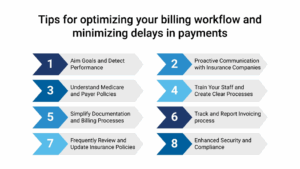
01 – Aim Goals and Detect Performance
First off, let’s set some goals and track a few important numbers to improve how you handle billing:
- Clean Claims Rate: This shows how accurate your billing is. The aim is to have a rate of 98% or higher. If claims are getting denied a lot, it’s a sign you need to figure out why and fix it.
- Days in Accounts Receivable: This tells you how long it takes to get paid. Ideally, less than 20% of your money should be sitting unpaid for over 90 days. If it’s more, it means you’re waiting too long to get your money.
- Cash As a Percentage of Net Revenue: This measures how good you are at turning your services into cash. Around 95% is a good target.
Keep an eye on these numbers to spot any issues in your billing process and make changes if needed.
02 – Proactive Communication with Insurance Companies
Keeping open communication with your clients’ insurance providers can prevent claim issues and delays. Before starting treatment, share your care plan with the insurance company and ensure they have all details.
Check your contract and negotiate if needed. Additionally, make sure clients know the expected costs beforehand to avoid surprises and review insurance policies yearly to update billing procedures.
03 – Understand Medicare and Payer Policies
A solid understanding of Medicare regulations and payer requirements is required for accurate and compliance invoicing. Familiarize yourself with the CPT codes that apply to your services and confirm they meet the standards of Medicare rules.
Furthermore, different Medicaid plans may use different methods for calculating billable codes, such as CMS 8-minute regulations or CPT recommendations. Stay updated on these regulations to avoid errors in coding and potential reimbursement delays.
04 – Train Your Staff and Create Clear Processes
Optimizing the billing process is a team effort, therefore it is important to equip your staff with insights into the critical nature of precise documentation, coding, and billing procedures.
Furthermore, set up transparent processes and offer continuous training to ensure everyone embraces best practices. Keep the communication lively, providing regular updates on billing regulations to keep your team sharp and prepared.
05 – Simplify Documentation and Billing Processes
Efficient documentation and invoicing systems are critical for optimizing reimbursement. Check that your treatment documents are complete and precise, and that it demonstrates the medical need of the services performed.
Consistent and clear paperwork not only helps in successful claim filing, but also enhances your case during any audits or reviews.
Make use of your Electronic medical records (EMR) to improve your documentation and billing operations, reducing mistakes and increasing efficiency. If possible, use your EMR to automate some billing procedures. When reviewing claims, you should also have a clear understanding of their status.
06 – Track and Report Invoicing process
Verify that all financial reports are correct and show the current value of accounts payable. Improve the efficiency of reporting in real time by automating processes and making sure they are up to date.
To strengthen the procedure, do the following:
- Keep precise records of all payments.
- Select on a payment option.
- Check contract conditions and bills.
- Guarantee that purchase orders are accurately billed.
07 – Frequently Review and Update Insurance Policies
To steer clear of unexpected billing issues, it’s crucial to stay on top of changes in insurance policies. Make it a habit to review your policies every year, updating forms and billing
procedures as needed.
Being proactive in keeping up with the latest insurance guidelines will ensure smooth compliance and optimal reimbursement.
08: Enhanced Security and Compliance
Prioritizing enhanced security and compliance within the context of billing optimization is essential for safeguarding sensitive data, maintaining legal adherence, and building trust with clients and partners. It forms the foundation on which a reliable and ethical billing ecosystem thrives.
Additional Tips:
1. Outsource Billing:
Consider outsourcing your billing to specialized firms, allowing your team to focus on core tasks. This can lead to improved efficiency and expertise in managing billing processes, ensuring timely payments and reduced billing errors.
2. Forecasting and Budgeting:
Engage in regular forecasting and budgeting to predict cash flow and allocate resources effectively. Understanding future financial needs enables proactive measures to minimize delayed payments and optimize the billing cycle.
3. Automate Payments & Reminders:
Leverage automated payment systems to process transactions seamlessly. Additionally, automated reminders for overdue payments can prompt clients, reducing the instances of delayed payments and streamlining the receivables process.
4. Provide More Payment Options:
Broaden the spectrum of payment options available to clients, catering to diverse preferences. Offering methods such as credit card, digital wallets, and ACH transfers can expedite payments and enhance customer convenience.
5. Reduce DSO (Days Sales Outstanding):
Implement strategies to minimize DSO by expediting the collection of accounts receivable. Streamlining invoicing processes, enforcing punctual payment terms, and conducting regular follow-ups can effectively reduce it, thereby accelerating revenue cycles.
Conclusion:
Late payments can cripple your business. But fear not, financial warrior! This comprehensive guide, packed with actionable tips, equips you to easen up your billing workflow and ensure faster, smoother payments.
So, don’t let delayed payments hold you back, enhance your billing for swift results!