
What Are CPT Codes?
CPT codes are five-digit numbers assigned to every task and service a healthcare provider may offer. This includes medical, surgical, and diagnostic services. CPT codes are essential for reporting procedures and services accurately to insurance companies, allowing them to process claims and determine payments.
Why Are CPT Codes Important in Workers’ Compensation?
For workers’ compensation cases, CPT codes help clarify the type of medical care a worker receives due to a workplace injury or illness. It is important for both healthcare providers and insurers to ensure accurate billing and appropriate compensation for the care provided.
Examples of CPT Codes in Workers’ Compensation

Here are a few examples of CPT codes commonly used in workers’ compensation:
-
99213: General office visit for an established patient.
-
20610: Injection of a major joint, such as the knee or shoulder.
-
97110: Therapeutic exercise to develop strength and endurance.
ICD-10 Codes: International Classification of Diseases, 10th Revision
What Are ICD-10 Codes?
ICD-10 codes are alphanumeric codes used by healthcare providers to describe diseases, conditions, symptoms, and other health-related issues. They offer a detailed description of a patient’s medical condition or diagnosis and are widely used worldwide.
The Role of ICD-10 Codes in Workers’ Compensation
In workers’ compensation cases, ICD-10 codes help describe the type of injury or illness a worker sustained on the job. They provide details about the cause of the injury, its location on the body, and other relevant information. This is important for both determining liability and ensuring proper treatment.
Examples of ICD-10 Codes in Workers’ Compensation

ICD-10 codes can range widely depending on the specific condition or injury. Here are some examples:
-
S13.4: Sprain of ligaments of the cervical spine.
-
S33.5: Sprain of ligaments of lumbar spine.
-
S61.5: Open wound of wrist.
HCPCS Codes: Healthcare Common Procedure Coding System
What Are HCPCS Codes?
HCPCS codes, pronounced “Hick Picks,” are a set of medical codes that include various services and products not covered by CPT codes. This can include medical equipment, supplies, ambulance services, and certain medications. HCPCS is divided into two levels:
-
Level I HCPCS: Equivalent to CPT codes.
-
Level II HCPCS: Covers items not included in CPT, such as medical devices and supplies.
HCPCS Codes and Their Importance in Workers’ Compensation
In workers’ compensation cases, HCPCS codes help cover services and equipment that may be required for recovery, such as wheelchairs, splints, or certain medications. They provide a comprehensive billing structure to ensure that all necessary products are billed correctly.
Examples of HCPCS Codes in Workers’ Compensation

Here are some examples of Level II HCPCS codes commonly used in workers’ compensation:
-
E0114: Crutches, underarm, other than wood.
-
A4550: Surgical trays.
-
J3490: Unclassified drugs.
How These Codes Work Together in Workers’ Compensation
In a workers’ compensation case, all three types of codes are often used together:
-
ICD-10 codes identify the injury or illness.
-
CPT codes detail the procedures or services provided.
-
HCPCS codes add information about any additional equipment or supplies used.
These codes work as a team, providing a full picture of the medical care provided to an injured worker. They enable healthcare providers and insurers to communicate efficiently, process claims accurately, and ensure proper treatment and payment.
Why Medical Coding Is Important for Workers’ Compensation Claims
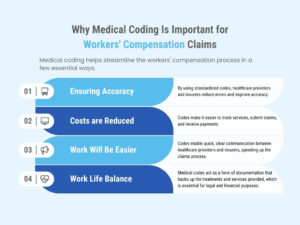
Medical coding helps streamline the workers’ compensation process in a few essential ways:
-
Ensuring Accuracy: By using standardized codes, healthcare providers and insurers reduce errors and improve accuracy.
-
Simplifying Billing: Codes make it easier to track services, submit claims, and receive payments.
-
Improving Efficiency: Codes enable quick, clear communication between healthcare providers and insurers, speeding up the claims process.
-
Supporting Documentation: Medical codes act as a form of documentation that backs up the treatments and services provided, which is essential for legal and financial purposes.
Who Uses Medical Codes in Workers’ Compensation?
Several different parties rely on these codes to manage workers’ compensation claims:
-
Healthcare Providers: Doctors, nurses, and other healthcare professionals use medical codes to document the care they provide.
-
Medical Coders: These professionals review patient records and assign the appropriate codes, ensuring that all treatments are accurately documented.
-
Insurance Companies: Insurers use these codes to assess the services provided, verify the claims, and determine payment.
-
Employers: In some cases, employers may also use medical coding information to better understand the costs and details of a worker’s claim.
Common Challenges in Workers’ Compensation Medical Coding
Medical coding is essential but can sometimes be challenging in workers’ compensation cases. Here are a few common challenges:
-
Cases of Complex Injuries: Workplace accidents can occasionally be complicated, including various diagnoses and treatments that call for different codes.
-
Code Changes: ICD-10 is one of the medical coding systems that undergoes frequent updates. Coders need to be aware of any updates.
-
Documentation Issues: If healthcare providers do not provide complete and accurate documentation, coders may struggle to assign the correct codes.
-
Understanding Workers’ Compensation Rules: Not all coders are familiar with the specific rules and regulations surrounding workers’ compensation claims, which can lead to errors.
Tips for Accurate Medical Coding in Workers’ Compensation
For anyone involved in workers’ compensation coding, here are a few tips to ensure accuracy:
-
Stay Updated: Medical coding systems change frequently, so it’s essential to stay informed about any updates.
-
Focus on Documentation: Detailed and accurate documentation is the foundation of successful coding.
-
Understand Workers’ Compensation Guidelines: Each state may have different rules for workers’ compensation. Knowing these guidelines can help coders make informed decisions.
-
Use Coding Resources: Many organizations provide guides, resources, and tools to help with medical coding for workers’ compensation cases.
Conclusion:
Medical codes like CPT, ICD-10, and HCPCS are the unsung heroes of workers’ compensation. They create a common language that unites healthcare providers, insurers, and injured workers, ensuring that everything from diagnosis to treatment is clear. These laws aren’t just billing tools—they streamline the whole process, helping injured workers cut through red tape and get quality care. The success of these laws enables healthcare teams and insurers to turn around complex issues into simple experiences that provide quick healing and payment of their just compensation, which is much needed.