
Key Takeaways:
→ Healthcare providers face unique challenges when billing and collecting worker’s compensation insurance. The medical process is complex and requires a thorough understanding of regulations and efficient claims and payments management.
→ This guide delves into the intricacies of worker’s compensation billing and collections, offering practical tips to optimize reimbursement for services provided.
Understanding Worker’s Compensation:
The workers’ compensation process is an insurance-related program regulated by the state and provides medical benefits and comp to employees who suffer from work-related injuries or illnesses. The program’s primary goal is to safeguard workers and companies by providing financial support and reducing the likelihood of litigation. If a worker or an employee gets injured while working in the company, they may need medical treatment from healthcare providers authorized by their employer’s worker’s compensation insurance carrier. The healthcare providers are responsible for billing the relevant insurance carrier for their services to injured workers. They must follow specific guidelines and procedures outlined by state regulations and the insurance carrier.
Navigating the Billing Process
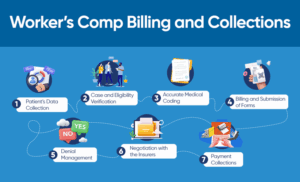
The worker’s compensation billing process involves several key steps, including:
Patient Data Collection and Verification
Before providing any treatment, healthcare providers must confirm the injured worker’s coverage under the employer’s worker’s compensation insurance policy to ensure eligibility for reimbursement of services rendered.
- Accurate Documentation
Accurately documenting the details of workplace injuries and the treatment provided is essential for healthcare providers to bill worker’s compensation claims successfully. Proper documentation in the patient’s medical records reduces the risk of claim denials or disputes. It also helps support the billing claim by providing comprehensive information about the injury and treatment. Therefore, detailed and thorough documentation is crucial for worker’s comp billing.
- Coding and Submission
When billing for injured workers, healthcare providers must use appropriate medical codes, such as ICD and CPT codes. These codes help identify the nature of the injury or illness and the specific treatments or procedures performed after the claim is coded and submitted to the worker’s compensation insurance carrier for processing.
- Follow-Up and Appeals
Once a healthcare provider has submitted a worker’s compensation claim, monitoring its status and following up with the insurance carrier as necessary is important. If the claim is denied or disputed, the provider may need to appeal the decision by providing additional documentation or evidence to support it.
- Streamlined Processes
Establishing efficient billing and collections processes can help minimize claims’ submission delays and errors. Electronic billing systems and practice management software can streamline administrative tasks and improve accuracy.
- Timely Submission
Submitting worker’s compensation claims is essential for prompt reimbursement. Providers should strive to submit claims promptly after services are rendered to avoid potential payment delays.
Effective communication with the worker’s compensation insurance carrier is critical throughout the billing process. Doctors should maintain open lines of communication to address any questions or concerns regarding claims and facilitate timely resolution. Comprehensive and accurate documentation is the cornerstone of successful worker’s compensation billing. Healthcare providers should ensure that all relevant information, including diagnosis, treatment plans, and progress notes, is documented in the patient’s medical records. Staying informed about state regulations and insurance carrier policies related to worker’s compensation is essential for navigating the billing process effectively. Providers should regularly review updates and changes to ensure compliance and maximize reimbursement.
Overcoming Challenges
Worker’s compensation billing and collections can present various challenges for healthcare providers, including:
- Complex Regulations
The regulatory landscape governing worker’s compensation varies by state and can be complex. Healthcare providers must stay informed about state-specific requirements and regulations to ensure compliance.
- Claim Denials and Disputes
Worker’s compensation claims may be denied or disputed for various reasons, such as incomplete documentation or coding errors. Providers must be prepared to address these challenges through timely appeals and additional documentation.
- Delayed Payments
Delays in reimbursement from worker’s compensation insurance carriers can impact healthcare providers’ cash flow and revenue cycle management. Implementing strategies to expedite claim processing and payment can help mitigate these challenges.
The Bottom Line
Billing and collecting worker’s compensation claims is a complex process that requires close attention to detail. Healthcare providers must know regulations and policies, implement best practices, and stay up-to-date with field changes to ensure proper reimbursement and improve financial performance. Effective communication with insurance carriers and a strong commitment to accurate documentation are crucial for success in the worker’s compensation billing and collections process.