
Workers’ Compensation is vital for employees dealing with work-related injuries or illnesses. Yet, understanding the complexities of Workers’ Compensation claims and billing can feel like wandering through a dense forest without a map for employers and healthcare providers. Thankfully, workers’ compensation billing services have come to the rescue, simplifying the process with skill and know-how.
What are Workers’ Comp Billing Services?
These services are specialized solutions offered by third-party providers to assist healthcare providers, employers, and insurance companies in managing the billing and reimbursement process related to workplace injuries or illnesses. These encompass a range of tasks, including claims submission, documentation, compliance, and reimbursement processing.
How Do They Work?
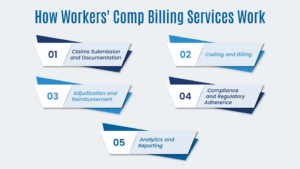
- Claims Submission and Documentation: Workers’ Comp billing services begin by gathering all pertinent information about the injury or illness, including medical records, treatment details, and incident reports. They ensure that all documentation complies with regulatory requirements and accurately reflects the nature of the injury and the treatment provided.
- Coding and Billing: Workers’ Comp billing services employ trained professionals specializing in medical coding and billing once the necessary documentation is in place. These experts assign appropriate medical codes to the treatments and services rendered, ensuring accurate billing and reimbursement from insurance providers.
- Adjudication and Reimbursement: Workers’ Comp billing services closely monitor the adjudication process after the claims are submitted to the insurance company. They follow up on outstanding claims, address any denials or discrepancies, and facilitate timely reimbursement for healthcare providers and employers.
- Compliance and Regulatory Adherence: Workers’ Comp billing services stay abreast of the latest regulatory changes and compliance requirements in the healthcare and insurance industries. They ensure that all billing practices adhere to state and federal regulations, minimizing the risk of penalties or legal complications.
- Analytics and Reporting: Additionally, these services often offer analytics and reporting tools to track key performance indicators, such as claim acceptance rates, reimbursement turnaround times, and revenue generation. These insights enable stakeholders to optimize their processes and maximize efficiency.
Denials and Appeals
In some cases, a patient might visit a healthcare provider for a work-related illness or injury without mentioning that it’s related to their job. In such instances, the provider bills the patient’s regular health insurance for the services or treatment.
Suppose the patient later requests that their workers’ compensation insurance cover the expenses, but the regular health insurance has already paid the provider. In that case, the workers’ compensation insurance needs to be billed instead. If the claim with workers’ compensation is rejected, an appeal process must be started. Any reimbursement received from the regular health insurance must be refunded.
There are various reasons why an insurer might deny a billing request, such as if there’s no claim on file, the injured person isn’t an employee of the company, the treatment isn’t directly linked to the reported work injury or the necessary documentation isn’t provided for payment processing.
Why are They Important?
Efficiency and Accuracy: Workers’ Comp billing services streamline the claims process, reducing administrative burden and minimizing errors. By leveraging technology and expertise, they ensure that claims are processed promptly and accurately, leading to faster reimbursement and improved cash flow.
- Cost Savings: Outsourcing Workers’ Comp billing tasks can be cost-effective for healthcare providers and employers. It eliminates the need to hire and train specialized staff, invest in expensive billing software, and independently navigate the complexities of Workers’ Comp regulations.
- Focus on Core Activities: By entrusting billing responsibilities to dedicated service providers, healthcare providers and employers can focus their resources on core business activities. This allows them to enhance patient care, improve workplace safety, and drive organizational growth.
- Risk Mitigation: Workers’ Comp billing services help mitigate the risk of non-compliance and legal disputes by ensuring adherence to regulatory requirements and industry best practices. This reduces the likelihood of audits, fines, and reputational damage associated with billing errors or fraudulent claims.
How are workers’ compensation claims processed and submitted?
When it comes to processing and filing workers’ comp claims, it’s important to understand the steps involved due to potential complexities. Here’s a breakdown of the basic process:
● The injured worker receives medical evaluation and treatment from a healthcare provider.
● The healthcare provider devises a treatment plan for the injured worker.
● Using the CMS-1500 claim form, the healthcare provider submits the claim to the workers’ compensation insurance company.
● The insurance company reviews the claim to determine its eligibility for payment.
● If the claim is approved, the insurance company pays the healthcare provider.
● The healthcare provider can appeal the decision in case of a claim denial.
Remember, each workers’ compensation insurance company follows its own requirements and procedures for handling claims. Therefore, verifying the specific guidelines with the insurer before initiating the claims process is crucial.
Conclusion:
Workers’ Comp billing services are vital in facilitating the efficient and compliant management of Workers’ Compensation claims. By leveraging expertise, technology, and enhanced processes, these services enable healthcare providers and employers to understand the difficulties of Workers’ Comp billing with confidence and focus on their core mission of promoting employee health and safety.