
Accidents can disrupt your life, leaving you uncertain about the next steps. Personal injury claims are vital for seeking compensation for injuries caused by someone else’s negligence, covering medical bills, lost wages, and pain and suffering.
But does it all work?
This guide breaks down the essentials of personal injury claims, from car accidents to medical malpractice, outlining the steps to file a claim and the challenges you might face. By understanding this process, you can take control and secure the compensation you need to move forward. Let’s demystify personal injury claims together.
Understanding Personal Injury Claims
A personal injury claim arises when an individual suffers harm from an accident or injury, and someone else might be legally responsible. This legal process allows the injured party to seek compensation for their losses, which include medical bills, lost wages, and pain and suffering.
Types of Personal Injury Cases
Personal injury claims cover a broad spectrum of scenarios. Here are some common types:
-
Car Accidents:
Car accidents are a common cause of personal injury claims. Drivers acting negligently may be held accountable for the resulting damages.
-
Slip and Fall:
Property owners are responsible for keeping their premises safe for visitors. If they neglect this duty, they can be held accountable for any accidents on their property.
-
Medical Malpractice:
When healthcare providers deviate from the expected standard of care and cause harm to a patient, they can be held liable and sued for medical malpractice.
-
Product Liability:
Manufacturers and sellers are legally responsible for compensating consumers if their products cause harm due to defects.
-
Workplace Accidents:
Employees who get injured while working can seek compensation through workers’ compensation. In some cases, they may also have the right to file personal injury claims against third parties.
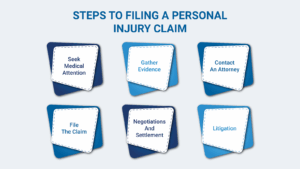
Steps to Filing a Personal Injury Claim
-
Seek Medical Attention:
Seeking immediate medical attention is essential following an accident. It ensures that your injuries are properly documented and treated and establishes crucial medical records that can support your claim.
-
Gather Evidence:
Gather as much evidence as possible, such as photos of the accident scene, statements from witnesses, and copies of the police reports. This will help to bolster your case.
-
Contact an Attorney:
Personal injury attorneys are legal professionals focusing on physical or psychological harm cases. They can offer legal guidance, manage discussions, and advocate for you in a courtroom.
-
File the Claim:
Your attorney will file the claim with the responsible party’s insurance company. This begins the negotiation process.
-
Negotiations and Settlement:
Most personal injury claims are settled out of court. Your attorney will negotiate with the insurance company to reach a fair settlement.
-
Litigation:
The case may go to trial if a settlement cannot be reached. Your attorney will present your case to a judge or jury, seeking the compensation you deserve.
Compensation in Personal Injury Claims
-
Economic Damages:
Economic damages cover tangible losses such as medical expenses, rehabilitation costs, and lost income. These damages are calculated based on actual financial losses.
-
Non-Economic Damages:
Non-economic damages compensate for intangible losses like pain and suffering, emotional distress, and loss of enjoyment of life. These are subjective and vary case by case.
-
Punitive Damages:
Punitive damages may be awarded in cases of gross negligence or intentional harm. These are intended to punish the wrongdoer and deter similar conduct in the future.
Common Challenges in Personal Injury Claims
-
Proving Liability:
Regarding personal injury cases, proving liability is a critical component. It involves demonstrating that the other party’s actions or negligence directly caused your injury. This process often requires gathering substantial evidence, such as eyewitness testimonies, police reports, photographs or videos of the scene, medical records, and expert witness opinions. The goal is to establish a clear link between negligent behavior and sustained injury.
-
Dealing with Insurance Companies:
Dealing with insurance companies after an injury can be overwhelming. They often try to minimize payouts by disputing injuries, blaming you for the accident, or offering low settlements. A personal injury attorney can help by countering these tactics, negotiating for fair compensation, and representing you in court if needed.
-
Statute of Limitations:
The statute of limitations is a legal deadline for filing a personal injury claim, typically around two years from the date of the injury. Failing to file within this period may result in losing the right to seek compensation. Acting promptly, consulting with an attorney, and ensuring all paperwork is filed correctly and on time is important. Attorneys can also provide guidance on any exceptions that might extend or shorten the filing deadline.
Conclusion
Understanding the basics of personal injury claims can help you navigate the process more effectively. Seeking legal assistance ensures that your rights are protected and that you receive the compensation you deserve. Remember to act promptly and gather all necessary evidence to build a strong case.