
Have you ever wondered what really happens when you hand your prescription to the pharmacist? Within seconds your insurance decides whether the medication is covered how much you’ll need to pay and if any extra steps are required before you can take it home.
This behind-the-scenes system is called the pharmacy claims adjudication process. It’s a crucial part of how prescriptions move smoothly from your doctor’s order to the pharmacy counter ensuring that medications are both safe and affordable for patients.
Here we’ll break down how the process works, why it matters, and how it connects to larger aspects of healthcare billing, such as ICD codes in medical billing, workers’ compensation claims and collections, and the overall pharmacy revenue cycle.
What is Pharmacy Claims Adjudication?
Pharmacy claims adjudication is the real-time process of verifying, pricing, and approving prescription claims submitted by pharmacies. It supports a healthy pharmacy revenue cycle by ensuring accuracy, regulatory compliance, and cost control.
The main participants in this process are pharmacies, PBMs, and insurance or government payers. Without effective adjudication, payment delays, claim denials, or errors could disrupt patient care and affect the efficiency of pharmacy workflows.
Pharmacy Claims Adjudication Process: How Does it Work?
The pharmacy claims adjudication process may sound complicated, but it follows a clear step-by-step flow. From submitting the claim to final approval or denial, each stage ensures prescriptions are accurate, safe, and properly billed. Let’s walk through how it works.
Step 1: Submitting the Claim
The process begins when the pharmacist enters your prescription into the pharmacy management system. That information is sent electronically to the patient’s insurance provider or Pharmacy Benefit Manager (PBM). This step includes details like the prescribed drug, dosage, quantity, and patient information.
At this point, the system instantly checks whether the patient is eligible for coverage and if the drug is included in their insurance plan’s formulary.
Step 2: Verifying Coverage and Eligibility
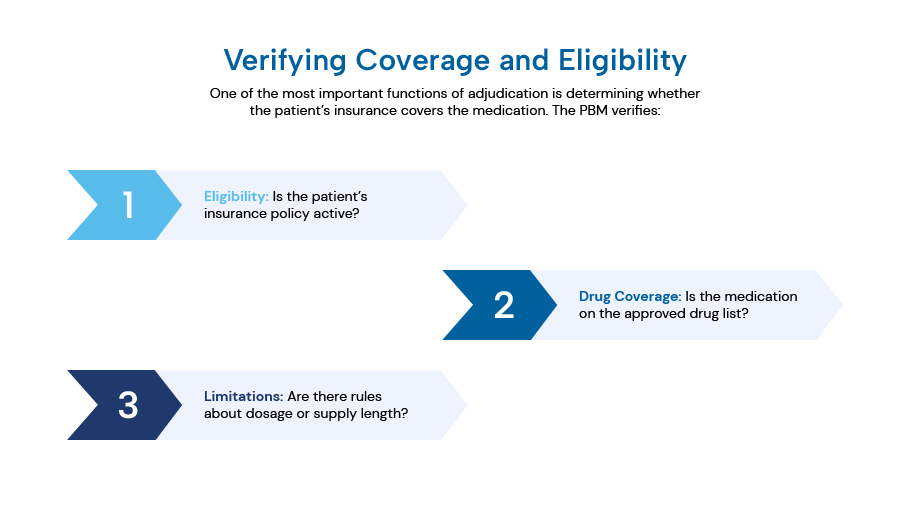
One of the most important functions of adjudication is determining whether the patient’s insurance covers the medication. The PBM verifies:
- Eligibility: Is the patient’s insurance policy active?
- Drug Coverage: Is the medication on the approved drug list?
- Limitations: Are there rules about dosage or supply length?
This step ensures that claims are aligned with the patient’s plan benefits, avoiding unnecessary costs or errors.
Step 3: Safety and Compliance Checks
The adjudication process also includes a real-time safety review. The system screens for potential drug-to-drug interactions, duplicate therapies, or known allergies. If any risks are identified, the pharmacist is alerted before the medication is dispensed.
This safeguard not only protects patients but also keeps providers compliant with regulations. Here’s where ICD codes in medical billing play a supporting role. The diagnosis codes linked to a prescription justify why a medication was prescribed in the first place. Accurate ICD coding ensures that the claim matches the medical need, reducing the chances of rejection or audit issues.
Step 4: Determining the Cost
Once eligibility and safety checks are complete, the system calculates payment details:
- How much the insurance company will pay the pharmacy
- The patient’s share of the cost (copay, coinsurance, or deductible)
- Any discounts or rebates that may apply
This step is where patients see the direct outcome of the adjudication process: how much they actually owe when picking up their prescription.
Step 5: Approval or Rejection
Finally, the system sends back a response:
- Approved: The claim is accepted, and the medication is dispensed.
- Rejected: The claim is denied due to issues like prior authorization requirements, refill too soon, or non-formulary drugs.
- Conditional Messages: For example, “Generic substitution required” or “Step therapy needed.”
If rejected the pharmacist may need to contact the prescriber for an alternative drug or request prior authorization from the insurer.
The Importance of Adjudication in the Pharmacy Revenue Cycle
The adjudication process is a vital part of the pharmacy revenue cycle. Pharmacies rely on accurate, timely claim approvals to maintain steady cash flow. Any delay, denial, or error in this process directly impacts revenue.
Efficient adjudication helps pharmacies:
- Receive payments faster
- Reduce claim denials
- Improve patient satisfaction by minimizing wait times
When integrated with strong revenue cycle management practices, pharmacies can better forecast revenue, manage operating costs, and stay compliant with payer requirements.
ICD Codes in Medical Billing and Their Link to Pharmacy Claims
While adjudication happens at the pharmacy, it is closely tied to medical billing practices. ICD codes in medical billing provide the standardized language payers use to understand why a treatment or prescription was ordered.
For example:
- An ICD code for hypertension supports the need for blood pressure medication.
- An ICD code for diabetes validates a claim for insulin.
Incorrect or missing codes can lead to claim denials, revenue loss, and even compliance risks. Pharmacies that coordinate with prescribers to ensure accurate ICD coding reduce errors and speed up reimbursements.
Workers’ Compensation Claims and Collections
Another area where adjudication plays a big role is workers’ compensation claims and collections. Employees injured on the job may require prescriptions covered under workers’ compensation insurance rather than standard health insurance.
This adds complexity to the adjudication process because:
- Claims must be billed to the correct payer (the employer’s workers’ comp insurer).
- Documentation must show that the prescription is directly related to the work injury.
- Collections can take longer because approval requires more detailed verification.
For pharmacies, effectively managing workers’ compensation claims and collections means establishing specialized workflows to prevent cash flow delays. Without a streamlined adjudication and billing process, pharmacies risk losing revenue or facing long payment cycles.
How Pharmacies Can Improve Their Adjudication Process
To avoid denials and protect revenue, pharmacies should focus on:
- Accurate Data Entry: This includes making sure that prescriptions are entered correctly with complete patient and prescriber information.
- Coordination with Providers: They must verify ICD codes and medical necessity documentation.
- Prior Authorization Management: They should proactively follow up on medications likely to need additional approval.
- Revenue Cycle Monitoring: Pharmacies must track rejected claims, analyze trends, and resolve issues quickly.
- Technology Upgrades: Pharmacies must opt for pharmacy management systems that integrate adjudication, billing, and reporting tools.
FAQs
What is the purpose of pharmacy claims adjudication?
It ensures accurate pricing, coverage verification, and timely reimbursement, directly impacting the pharmacy revenue cycle.
How do ICD codes in medical billing affect pharmacy claims?
ICD codes connect diagnoses to prescriptions, supporting claim approval and optimizing the pharmacy billing process.
Why are workers’ compensation claims challenging for pharmacies?
They require additional documentation, coordination, and follow-up, which can slow collections and affect the pharmacy revenue stream.
How can pharmacies improve their revenue cycle?
Invest in automation, staff training, accurate coding, and compliance strategies to boost the pharmacy revenue cycle and reduce claim denials.
How does technology influence pharmacy revenue management?
Advanced tools such as automation, AI, and integrated EHRs increase accuracy, speed adjudication, and improve overall financial performance.
Final Thoughts
Pharmacy claims adjudication is essential for maintaining a strong pharmacy revenue cycle. Accurate and efficient claim processing supports compliance, enhances patient care, and improves financial performance. By investing in technology, training staff, and adhering to regulatory requirements, pharmacies can reduce denials, speed up reimbursements, and ensure long-term profitability.